
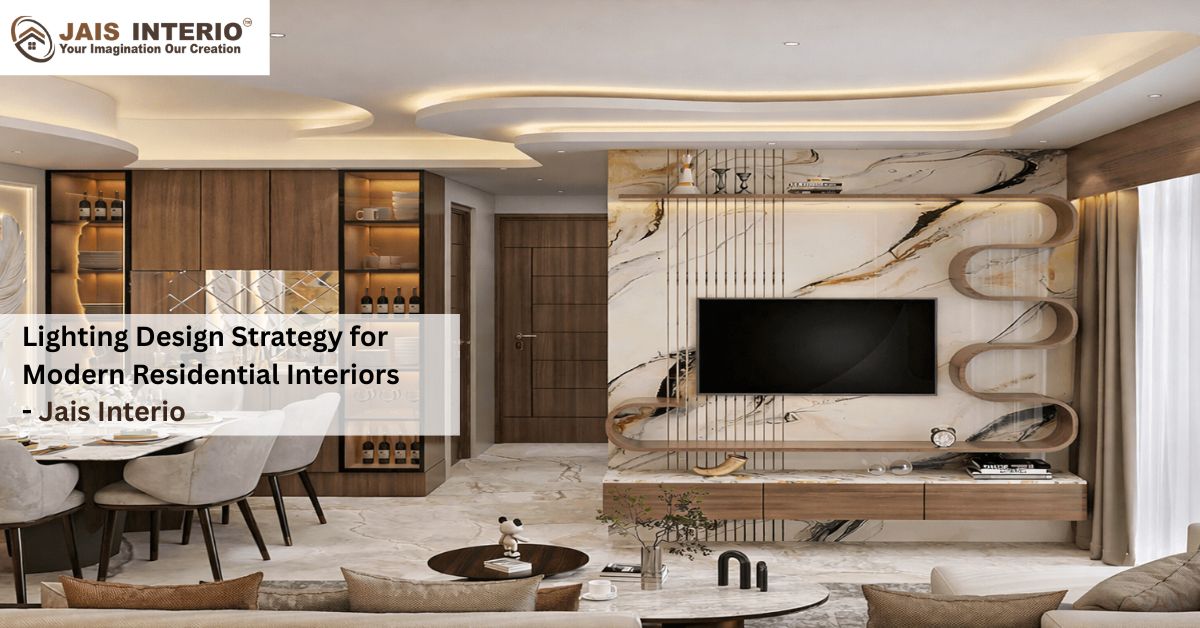
Lighting Design Strategy for Residential Interiors: Function, Mood, and Efficiency
Lighting is one of the most powerful elements in home design, influencing how a space looks, feels, and functions every day. While furniture and decor define style, lighting determines comfort, usability, and emotional experience. A well-planned lighting design strategy for residential interiors balances functionality, mood, and efficiency to create spaces that truly enhance modern living.
Today, homeowners are actively searching for residential lighting design ideas that combine aesthetics with practicality. With expert planning from Jais Interio interior designers, lighting becomes more than illumination — it becomes a design feature that transforms the entire home environment.
Why Lighting Design Matters in Residential Interiors
Lighting plays a crucial role in enhancing architectural beauty and improving daily functionality. Poor lighting can make even premium interiors feel dull, while well-designed lighting highlights textures, colors, and spatial depth.
A strong lighting strategy helps to:
- Improve visibility and comfort
- Create a welcoming and relaxing atmosphere
- Highlight interior features and décor
- Enhance productivity in functional areas
- Reduce energy consumption through smart planning
Professional designers understand that lighting must work alongside layout and materials to achieve balance. This is why Jais Interio interior and exterior design solutions integrate lighting from the early planning stage.
The Three Layers of Residential Lighting
A successful lighting plan combines three essential layers that work together to create harmony and flexibility.
- Ambient Lighting (General Illumination)
- Ceiling-mounted fixtures
- Recessed lighting
- LED panels
- Cove lighting designs
- Task Lighting (Functional Lighting)
- Under-cabinet kitchen lights
- Study desk lamps
- Bathroom mirror lighting
- Bedside reading lights
- Accent Lighting (Mood & Highlighting)
- Artwork illumination
- Display shelf lighting
- LED strip lighting behind panels
- Feature wall highlighting
Ambient lighting provides overall brightness and ensures smooth movement throughout the home. It forms the foundation of residential lighting design.
Common ambient lighting options include:
Soft, evenly distributed lighting prevents harsh shadows and creates a comfortable environment suitable for everyday living.
Task lighting focuses on specific activities such as cooking, reading, working, or grooming. Proper placement improves visibility and reduces eye strain.
Examples include:
Designers carefully analyze lifestyle habits to ensure lighting supports daily routines efficiently.
Accent lighting adds personality and visual depth by highlighting architectural elements or decor features.
Popular applications include:
Accent lighting enhances luxury appeal and creates a layered visual experience within residential interiors.
Designing Lighting Based on Functionality
Each area of a home requires a unique lighting approach depending on how the space is used.
- Living Room:
- Kitchen:
- Bedroom:
- Bathroom:
Layered lighting works best here. Combining ambient lighting with decorative lamps and accent lights creates flexibility for relaxation and entertaining.
Bright task lighting ensures safety and efficiency. Focused ceiling lights and under-cabinet LEDs eliminate shadows while cooking.
Soft, warm lighting promotes relaxation and comfort. Dimmable lights allow homeowners to adjust brightness according to mood.
Balanced mirror lighting combined with ambient illumination provides clarity while maintaining a soothing atmosphere.
These practical layouts are among the most recommended modern home lighting tips for improving both comfort and functionality.
How Lighting Influences Mood and Atmosphere
Lighting has a direct psychological impact on how people feel within a space. Color temperature and brightness levels play a significant role in creating mood.
- Warm light (2700K–3000K): Cozy and relaxing, ideal for bedrooms and living rooms
- Neutral light (3500K–4000K):Balanced lighting for everyday activities
- Cool light (5000K+):Energizing and suitable for kitchens or workspaces
Combining natural daylight with artificial lighting creates visual balance throughout the day and enhances overall well-being.
Energy Efficiency in Modern Lighting Design
Energy-efficient lighting has become a priority in modern homes. Smart lighting strategies reduce electricity consumption while maintaining performance and style.
Key solutions include:
- LED lighting systems with longer lifespan
- Motion sensors for low-traffic areas
- Smart automation controls
- Daylight optimization techniques
Energy-efficient lighting not only lowers utility bills but also supports sustainable living practices.
Common Lighting Design Mistakes to Avoid
Many homeowners overlook lighting planning, which can negatively impact interior aesthetics and usability. Common mistakes include:
- Using only one central light source
- Ignoring task lighting needs
- Choosing incorrect color temperatures
- Over-lighting or under-lighting spaces
- Planning lighting after interior work is completed
Working with professionals helps avoid these issues and ensures cohesive results.
Integrating Interior and Exterior Lighting
A well-designed home connects indoor and outdoor lighting seamlessly. Exterior lighting improves safety, enhances architectural features, and creates an inviting nighttime appearance.
Examples include:
- Entrance pathway lighting
- Balcony ambient lighting
- Garden accent lights
- Facade illumination
Integrated lighting planning ensures visual continuity between interior and exterior spaces.
Smart Lighting Trends in Modern Homes
Technology has revolutionized residential lighting design. Smart lighting systems allow homeowners to personalize lighting experiences based on activity and time of day.
Trending features include:
- App-controlled lighting systems
- Voice-activated controls
- Automated brightness adjustments
- Scene-based lighting settings
These innovations enhance convenience while improving efficiency and comfort.
Why Choose Jais Interio for Residential Lighting Design
When it comes to professional lighting planning, expertise makes a significant difference. Recognized among the top interior lighting designers in Kolkata, Jais Interio focuses on combining creativity with technical precision.
Key advantages include:
- Customized lighting strategies tailored to lifestyle needs
- Integration of lighting with complete interior concepts
- Expertise in both interior and exterior lighting solutions
- Use of modern and energy-efficient technologies
- Attention to mood, comfort, and long-term functionality
With experienced professionals guiding every step, homeowners achieve balanced interiors that feel both stylish and practical.
Conclusion
A thoughtful lighting design strategy for residential interiors transforms homes beyond aesthetics. By combining ambient, task, and accent lighting, homeowners can create spaces that are functional, emotionally comforting, and energy efficient.
Lighting influences how people live, relax, and interact within their homes. When planned correctly, it enhances architectural beauty while supporting comfort and sustainability. With expert guidance from Jais Interio interior designers, homeowners can achieve perfectly balanced interiors where function, mood, and efficiency work together seamlessly.
Ready to transform your home with a smart and stylish lighting plan?
Connect with Jais Interio today for expert interior and exterior design solutions tailored to your lifestyle. Book your consultation now and bring perfect lighting, comfort, and elegance into your home!
FAQs
Why is lighting design important in residential interiors?
Lighting improves functionality, enhances mood, highlights décor elements, and creates a comfortable living environment while supporting energy efficiency.
What are the main types of lighting used in home interiors?
Residential lighting includes ambient lighting for overall illumination, task lighting for specific activities, and accent lighting to highlight architectural features.
How do I choose the right lighting color temperature for my home?
Warm lighting suits relaxation areas, neutral lighting works for common spaces, and cool lighting is ideal for kitchens and workspaces requiring clarity.
Are LED lights better for residential lighting design?
Yes, LED lights are energy-efficient, long-lasting, and versatile, making them ideal for modern residential interiors.
Should lighting be planned before interior design is completed?
Yes, lighting should be planned early to ensure proper placement, avoid costly modifications, and allow lighting to complement the overall interior design effectively.